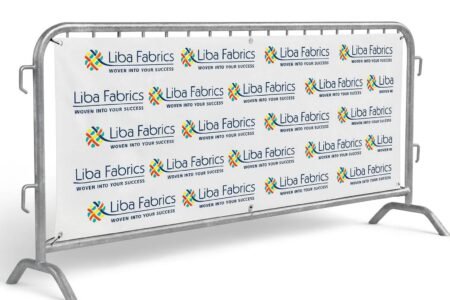





Crowd control and perimeter management infrastructure represents a significant capital investment when purchased outright — one that makes financial sense for organizations with continuous, high-volume deployment requirements but creates unnecessary cost burden for the majority of event planners, contractors, and municipal agencies whose barricade needs are project-specific rather than permanent. Barricade rental resolves this equation directly — providing access to professional-grade crowd control infrastructure on a project basis, with the delivery, installation support, and recovery logistics that ownership requires handled by the rental provider rather than the customer. For organizations whose barricade requirements vary in scale, frequency, and type across their project pipeline, rental consistently delivers better operational and financial outcomes than ownership — and understanding why makes the decision straightforward.
This is the operational case for barricade rental across the event, construction, and municipal contexts where it delivers its most significant value.
The Financial Logic of Barricade Rental
The purchase versus rental decision for crowd control equipment follows a consistent financial logic that applies across every industry that uses project-specific infrastructure: ownership is cost-effective when utilization rates are high enough to amortize capital cost and ongoing maintenance expense across a sufficient number of deployments; rental is cost-effective when utilization rates are variable, deployment requirements differ across projects, or the overhead of ownership — storage, maintenance, transport equipment, and trained installation personnel — exceeds the cost of accessing equivalent equipment through a rental relationship.
For most event planners, barricade ownership falls decisively on the rental side of this equation. A full-scale outdoor festival requiring 2,000 linear feet of steel crowd control barricades might need identical coverage for two events annually — a utilization rate that makes the capital cost, storage space, transport fleet, and maintenance overhead of a 250-unit barricade inventory economically indefensible relative to renting the same equipment for each event at a fraction of the ownership cost per deployment.
For municipal agencies managing variable crowd control requirements across an annual calendar of public gatherings — parades, civic events, public demonstrations, and emergency deployments whose timing and scale cannot be predicted with precision — the flexibility of rental eliminates the inventory mismatch between what ownership provides and what individual deployments require. An agency that owns 100 barricade units is over-equipped for events requiring 40 and under-equipped for events requiring 200 — rental scales to each deployment’s actual requirement without the inefficiency of fixed inventory.
For construction contractors whose project pipeline spans work zones of variable size, duration, and location — each requiring different barricade specifications, quantities, and deployment configurations — rental eliminates the transport logistics and inventory management overhead that barricade ownership imposes on organizations whose core competency is construction rather than crowd control equipment management.
What Professional Barricade Rental Actually Includes
The operational value of barricade rental extends well beyond equipment access — a full-service rental relationship covers the complete deployment lifecycle in ways that equipment-only rental does not:
Delivery and logistics. Professional barricade rental providers deliver equipment to the deployment site using their own transport fleet — eliminating the specialized vehicle requirements that barricade self-transport imposes on customers. Steel crowd control barricades, concrete jersey barriers, and other heavy crowd control equipment require flatbed trucks, crane vehicles, or forklifts for transport and placement — equipment that event planners, municipal agencies, and construction contractors rarely maintain in their own fleets. Delivery as part of the rental service converts a significant logistical challenge into a scheduled delivery confirmation.
Installation support. Full-service barricade rental includes installation crews who place, connect, and configure barrier systems according to the customer’s layout plan — eliminating the trained personnel requirement that barricade installation imposes. Proper steel barricade installation — connection hardware engagement, gate positioning, corner configuration, and barrier line straightness — requires experience that installation crews bring to every deployment and that customers without barricade installation background cannot replicate reliably from written instructions.
Configuration flexibility during the rental period. Event requirements change between planning and execution — crowd flow patterns that were anticipated at layout planning may require adjustment when the actual crowd arrives, security requirements may necessitate additional barrier coverage at specific points, or access control needs may require gate repositioning after initial installation. Full-service rental relationships provide the responsive configuration support that ownership without dedicated installation personnel cannot offer during an active event.
Recovery and removal. Barricade recovery after event conclusion requires the same equipment and personnel as installation — and the same logistical planning. Full-service rental includes scheduled recovery that removes the customer’s post-event barricade management burden entirely — the rental provider returns with appropriate equipment and crews, removes the barrier system, and leaves the site clear without requiring customer involvement beyond confirming the recovery schedule.
Barricade Rental Across Different Deployment Contexts
Concert and festival events. The concert and festival environment generates the most complex barricade rental requirements in the event industry — stage front crowd management systems, general admission perimeter coverage, artist access corridors, VIP area separation, vendor zone boundaries, and entry point access control all require different barricade specifications and configurations within a single event footprint. A full-service barricade rental provider with sufficient inventory depth can supply all of these requirements from a single rental relationship — simplifying the procurement, logistics, and on-site coordination that sourcing from multiple vendors would require.
Sporting events and stadium operations. Sporting event barricade requirements combine the crowd pressure demands of concert environments with the access control complexity of multi-zone venue management. Barricade rental for sporting events must account for fan separation requirements between opposing supporter groups, field or court protection barriers that meet league or governing body specifications, and the entry point management infrastructure that high-volume ticketed events require. Rental providers with sporting event experience understand these specific requirements and can supply configurations that meet them without the trial-and-error learning curve that inexperienced providers impose on customers.
Municipal and government events. Parades, civic ceremonies, and public gatherings managed by municipal agencies present barricade rental requirements that differ from private event contexts in several important ways — public safety obligations that exceed the liability management concerns of private events, permit and coordination requirements with traffic management and public safety departments, and the variable urban geometries of public space deployments that differ from the controlled environments of dedicated event venues. Municipal barricade rental relationships work most effectively when the rental provider has direct experience with public space deployment — understanding the permit process, the traffic management coordination requirements, and the public safety obligations that municipal deployments impose.
Road construction and infrastructure projects. Construction zone barricade rental covers work zone protection requirements that range from single-lane road closures on residential streets to multi-lane highway work zones where worker safety requirements are most stringent. Barricade rental for construction contexts must match equipment specification to the traffic speed and volume of the work zone — plastic water-filled barriers for low-speed residential and parking lot applications, concrete jersey barriers for arterial road and highway work zones where vehicle mass and speed create the most severe worker safety requirements. Construction contractors who maintain rental relationships with barricade providers across their project pipeline eliminate the procurement overhead that sourcing barriers project-by-project would require.
Emergency and unplanned deployments. Municipal emergency management agencies, law enforcement organizations, and security companies whose deployment requirements include unplanned emergency responses need rental relationships with providers capable of rapid mobilization — delivering and installing barricade systems on compressed timelines that standard event rental scheduling does not accommodate. Confirming a rental provider’s emergency deployment capability — minimum lead time, after-hours availability, and rapid mobilization inventory — before an emergency deployment is required ensures that the rental relationship delivers when unplanned situations demand it.
Key Questions to Ask Before Committing to a Barricade Rental Provider
The barricade rental market includes providers whose operational capabilities vary significantly — and whose service quality differences become most apparent under the time pressure and logistical complexity of actual deployments. The questions that distinguish capable providers from inadequate ones:
Inventory depth and availability confirmation. A rental provider whose available inventory is insufficient for the deployment scale — or whose equipment is committed to competing deployments on the same date — cannot fulfill the rental agreement regardless of its terms. Confirming inventory availability for the specific deployment date, quantity, and equipment type before committing to a rental relationship prevents the last-minute sourcing crisis that inventory shortfalls create.
Delivery and installation capability. Confirming that the rental provider operates their own delivery fleet and installation crews — rather than subcontracting to third parties whose quality and availability they do not directly control — ensures consistent service delivery across the rental period. Subcontracted installation introduces coordination complexity and quality variability that full-service providers with their own crews eliminate.
Rental duration flexibility. Event timelines change, construction projects run long, and municipal deployments encounter permit delays that extend the originally planned rental period. Confirming the rental provider’s flexibility on duration extensions — and the terms under which extensions are accommodated — prevents the cost surprises and equipment conflicts that rigid rental terms create when project timelines shift.
Equipment condition and maintenance standards. Barricade equipment deployed at professional events and public gatherings is subject to scrutiny that equipment used in construction zones is not — damaged, rusty, or visibly degraded barricades reflect on the organization that deployed them as well as the rental provider that supplied them. Confirming the rental provider’s equipment maintenance standards and the condition of the specific units to be deployed prevents the professional presentation problems that poorly maintained rental equipment creates.
Rental as the Operational Standard for Professional Crowd Control
The organizations that manage crowd control most effectively — experienced event production companies, professional security firms, and well-resourced municipal agencies — consistently use rental rather than ownership as their primary equipment access model. Not because they cannot afford to own, but because rental delivers better operational flexibility, eliminates non-core overhead, and scales to each deployment’s actual requirements without the inventory management burden that ownership imposes.
For organizations whose barricade requirements are defined by project-specific needs rather than continuous high-volume deployment, that operational logic is compelling — and the rental relationship that implements it is one of the highest-leverage operational decisions available in crowd control planning.
Epic Crowd Control provides professional barricade rental services for event planners, municipal agencies, construction contractors, and security organizations across every scale of deployment — with the inventory depth, delivery capability, installation expertise, and service responsiveness to support crowd control operations that perform when the crowds arrive. Explore the full range of rental solutions and build the perimeter infrastructure your next project demands.