
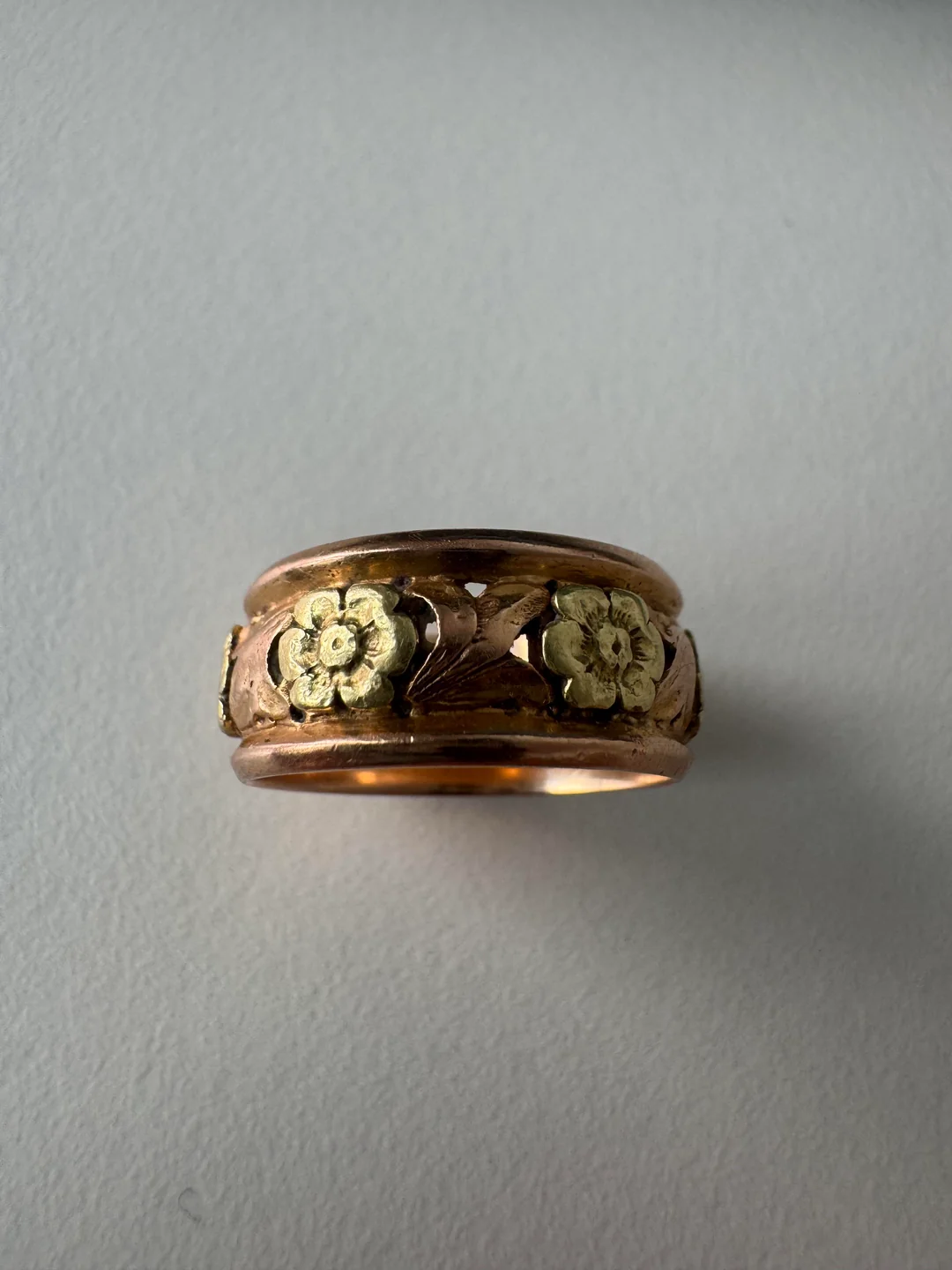
Few names in antique bridal jewelry carry as much recognition as the orange blossom ring company founded by Traub Manufacturing in Detroit in the 1910s. For collectors who stumble across a ring stamped with the words “Orange Blossom” alongside a small circular maker’s mark, that discovery often opens the door to a much larger story about how one design became one of the most recognizable in American bridal jewelry history.
The symbolism behind the motif predates the company itself by decades. Orange blossoms became associated with weddings during the Victorian era, when the pure white flowers were seen as a symbol of purity and new beginnings. Queen Victoria helped popularize the tradition when she wore orange blossoms at her own wedding in 1840, and the trend carried into jewelry design as brides sought ways to carry that symbolism into a keepsake that would last well beyond the flowers themselves.
Traub Manufacturing built its reputation on translating that symbolism into fine jewelry, producing engagement rings and wedding bands featuring hand chased blossom patterns rather than simple stamped designs. This distinction mattered enormously to the brand’s identity. Because the floral detailing was carved by hand rather than mass produced, each ring carried subtle variations that gave it genuine character, something that became a selling point in an era when jewelry advertising increasingly emphasized craftsmanship as a mark of quality.
That reputation for craftsmanship created an unusual problem. The Orange Blossom design became so popular that other manufacturers began producing imitation versions, prompting Traub to run advertisements urging buyers to check the inner surface of a ring for the genuine hallmarks before purchasing. This history explains why so many rings today carry both the words “Orange Blossom” and a separate maker’s mark, since the combination was originally meant to protect buyers from convincing knockoffs circulating at the time.
For today’s collectors, these details matter just as much as they did a century ago. A genuine piece typically carries both markings clearly stamped into the metal, along with a karat purity mark for gold content, commonly 14k or 18k, or a platinum designation on finer examples. The hand chased floral detailing should show the slight irregularities of hand craftsmanship rather than the uniform repetition of a machine stamped pattern. Because so many of these rings were personalized at the time of purchase, it is also common to find initials and a wedding date engraved on the inner band, details that can help narrow down a piece’s age and sometimes even its original owners.
Condition is another important factor for anyone evaluating one of these rings today. Decades of daily wear can thin out prongs or soften the crispness of hand engraved details, so a jeweler experienced with antique pieces should examine the setting before any resizing or repair is attempted. Because the floral engraving often extends close to the band’s edge, resizing requires particular care to avoid disrupting the original pattern.
What makes these rings endure in popularity is not simply their age but the story embedded in the design itself. A ring meant to symbolize purity and new beginnings, crafted by hand in a Detroit workshop over a century ago, still carries that same intention today. For collectors, gift buyers, and couples drawn to jewelry with real provenance, that combination of symbolism and craftsmanship is difficult to find in anything produced new.
Anyone researching a family piece or looking to add an authenticated example to their collection can find detailed background and a curated selection at Gesner Estate Jewelry, where the history behind each ring is treated with the same care as the craftsmanship itself.
